Existing PSYCTOTHERM Equipment
Use the installed model, nameplate, operating condition and required outcome to define parts, renewal or replacement requirements.
PSYCTOTHERM · MARINE HVAC & REFRIGERATION · PANAMA
PSYCTOTHERM marine HVAC and refrigeration equipment with Panama-based vessel survey, engineered replacement and onboard integration by TESS.
From an existing nameplate or obsolete system to a defined chiller, air-handling, packaged A/C or provision-refrigeration solution—reviewed against duty, dimensions, interfaces and the vessel's service window.
Request Onboard Technical Survey
EQUIPMENT + ENGINEERING + ONBOARD EXECUTION
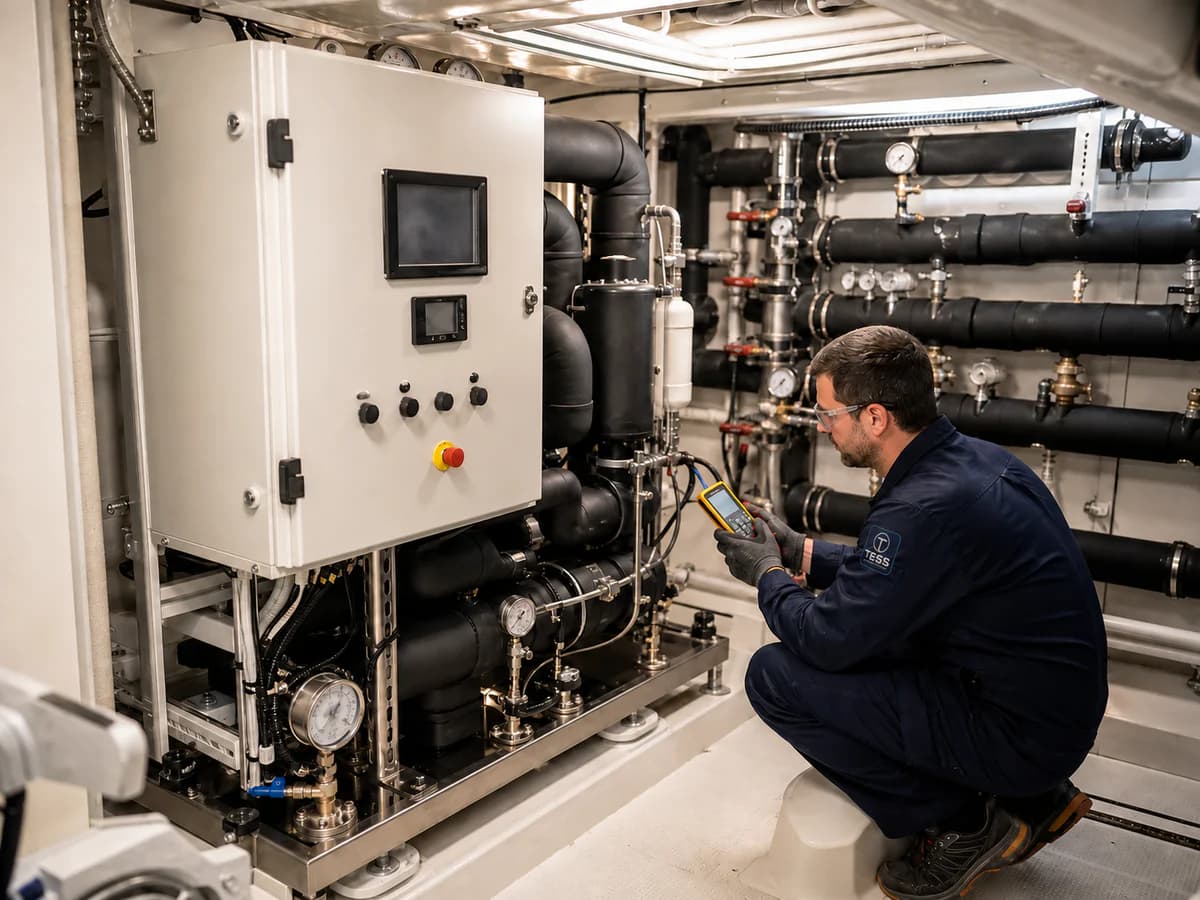
TESS supports PSYCTOTHERM equipment selection, supply coordination and vessel-side integration in Panama. The technical route starts with the installed system, required duty and real onboard interfaces—not a catalogue model in isolation.
Use the installed model, nameplate, operating condition and required outcome to define parts, renewal or replacement requirements.
Review chillers, airside equipment, packaged A/C and provision-refrigeration equipment against duty, space, utilities and project timing.
An obsolete or unsupported unit can be evaluated for a PSYCTOTHERM replacement with the required vessel-side modifications defined case by case.
START WITH THE EQUIPMENT OR THE PROBLEM
Choose the closest product family. If the equipment cannot be identified, send a clear nameplate photo and an overall installation photo.
Central chilled-water plant, renewal or new selection.
ADedicated marine spaces and obsolete package replacement.
AAir handling, fan coils, cabin units and coils.
BCabins, public spaces and compact retrofit interfaces.
AProvision plants, condensing units and controls.
BRefrigeration air coolers and custom coils.
BKnown PSYCTOTHERM components and equipment data.
AObsolete PSYCTOTHERM or other-brand equipment.
→Begin with photos; full drawings are not required.
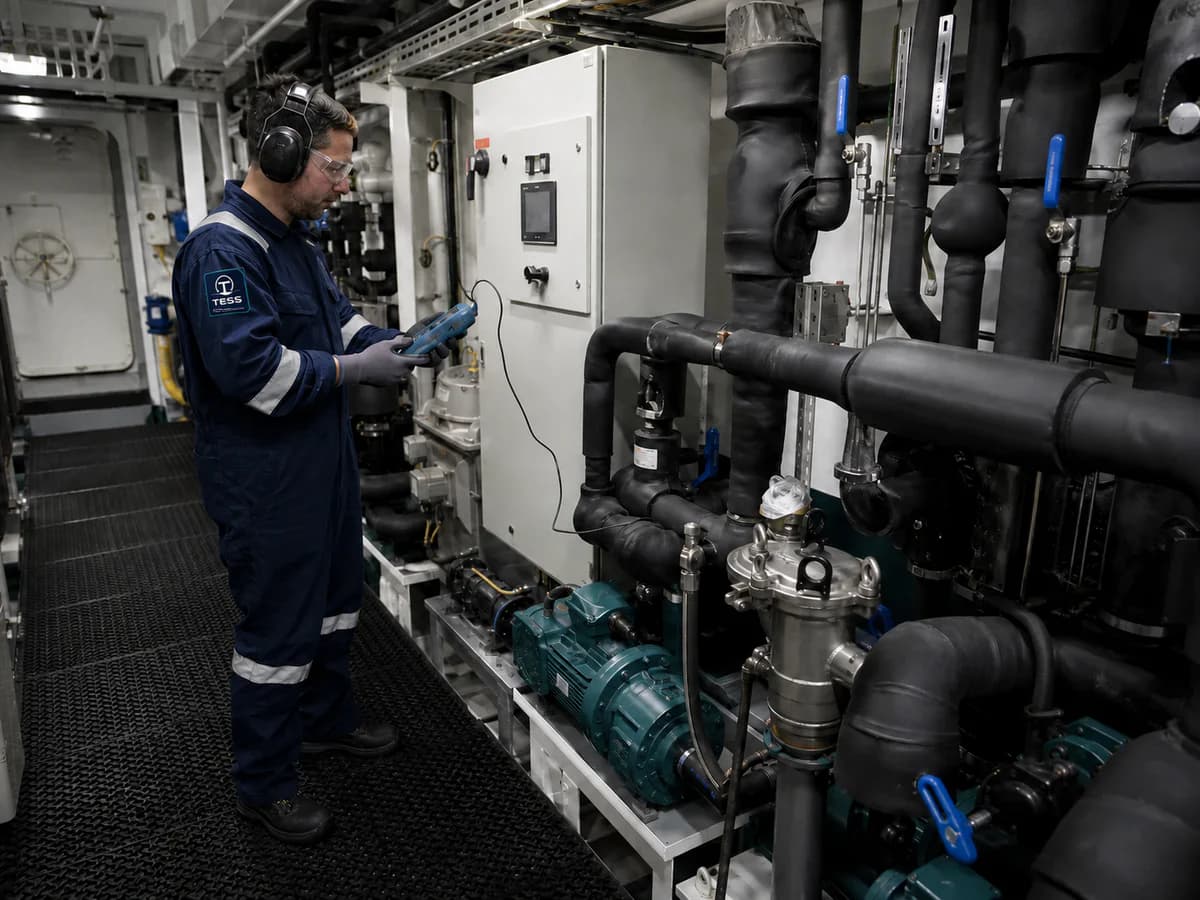
PRIMARY PRODUCT PATH
PSYCTOTHERM marine chillers can be evaluated for central chilled-water applications on merchant and passenger vessels, fishing-vessel chilled-water duties where applicable, and yachts. Selection is developed around the actual cooling load, chilled-water conditions, heat-rejection conditions, electrical supply, redundancy, available footprint and access.
A replacement chiller is only one part of the onboard result. TESS can define and coordinate the connected pumps, chilled-water and seawater piping, strainers, valves, insulation, foundations, electrical supply, controls, flushing, balancing and commissioning that the confirmed scope requires.
Certification and class requirements are confirmed for the selected equipment and vessel. PSYCTOTHERM notes marine and additional certification options on selected chiller configurations upon request; this is not generalized to every product.
DEDICATED MARINE SPACES
Packaged, deck and marine split equipment can serve bridges, wheelhouses, upper-deck spaces, control rooms and other defined areas where a dedicated solution is technically appropriate.
For an existing unit, the review covers required duty, marine exposure, dimensions, removal and access route, duct arrangement, condensate drainage, electrical supply, controls, refrigerant strategy and any foundation or enclosure modification. Residential wall-split assumptions are not used as the design basis for a vessel equipment replacement.
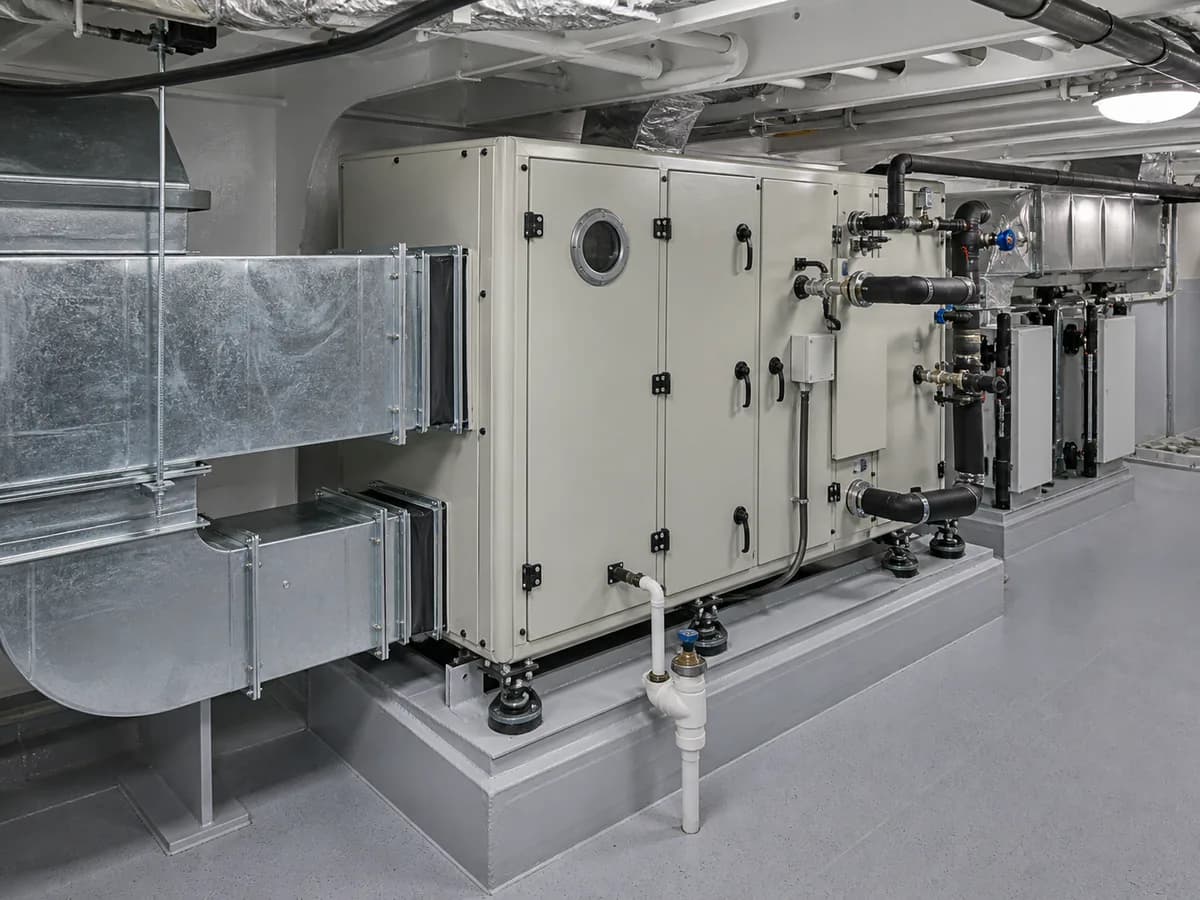
AIR DELIVERY + CABIN COMFORT
PSYCTOTHERM airside equipment can be considered for AHU, fan-coil, cabin-unit and custom-coil requirements on commercial vessels, passenger vessels and yachts. Replacement work must connect the selected equipment to the real airflow, chilled-water or refrigerant circuit, drainage, ductwork, insulation, controls and access envelope.
Passenger and yacht applications often combine public-space AHUs with multiple cabin fan coils and control zones. TESS can survey the installed arrangement, define interface work and coordinate airflow balancing and commissioning where included in the confirmed scope.
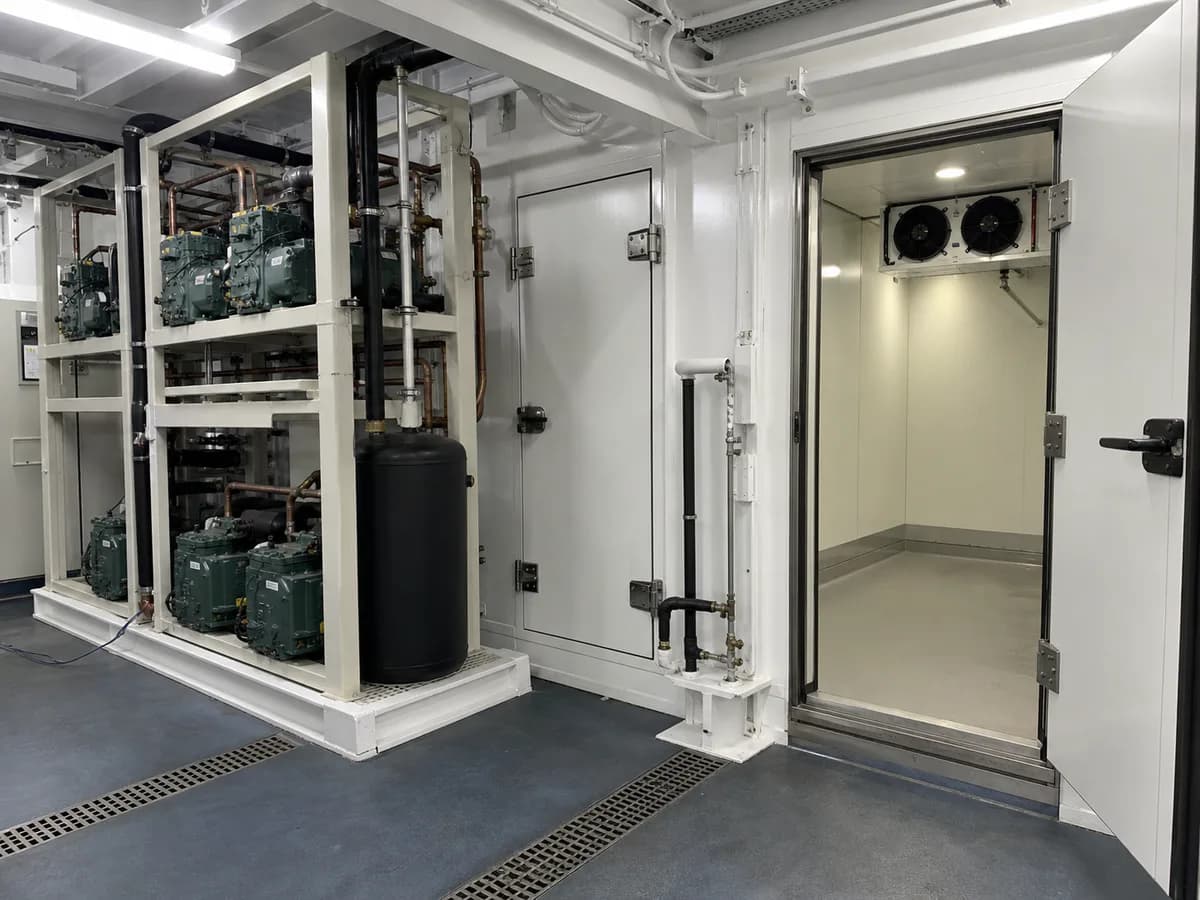
COMPLETE REFRIGERATION PATH
PSYCTOTHERM requirements can extend from a condensing unit or refrigeration air cooler to a complete provision-refrigeration plant with the necessary control and system interfaces. The commercial scope may address provision cold rooms, freezer rooms, galley-related storage and other defined shipboard temperature-controlled spaces.
Equipment selection is reviewed with the space duty, evaporating and condensing conditions, refrigerant strategy, air circulation, defrost and drainage needs, electrical supply, controls, piping route and commissioning plan. Existing refrigeration faults remain within the Marine Refrigeration Repair pathway until replacement is technically justified.
A heat exchanger, condenser or evaporator required as standalone thermal equipment belongs in the FARAD / marine heat exchanger pathway.
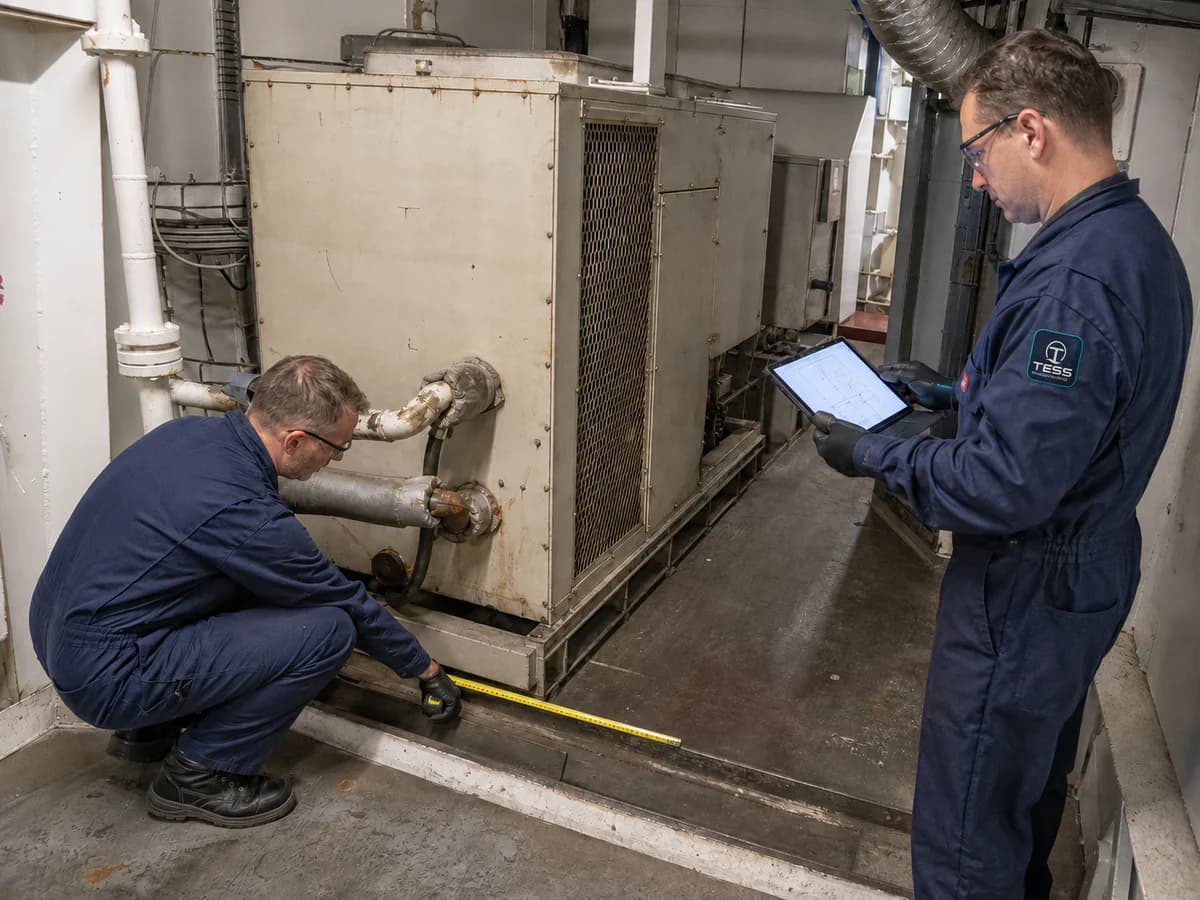
HIGH-VALUE REPLACEMENT PATH
Existing equipment may be discontinued, unsupported, corroded, unreliable or uneconomic to source. A PSYCTOTHERM solution can be evaluated as an engineered marine replacement—but suitability is confirmed against the complete operating and installation context.
Send Existing Equipment DetailsRecord the installed equipment, nameplate, condition and required outcome.
Check load, design and operating conditions rather than relying on dimensions alone.
Capture footprint, connections, power, controls, drainage and surrounding clearances.
Plan removal, delivery, lifting, structural openings and safe service access.
Select equipment and document required vessel-side modifications.
Procure, install, connect, test and commission within the agreed project window.
PSYCTOTHERM equipment can be evaluated for engineered marine replacement and retrofit applications, subject to duty, dimensions, connections, electrical supply, refrigerant strategy, access, controls and required certification. Replacement suitability is confirmed case by case.
FROM REPEATED FAILURE TO A DEFINED PROJECT
A retrofit decision can follow obsolescence, repeated compressor failures, aging controls, degraded AHUs or coils, insufficient capacity, unreliable provision refrigeration, legacy refrigerant concerns, changed vessel service, accommodation conversion or a planned yacht refit.
Not every operating issue requires new equipment. TESS can separate diagnostic work from replacement planning, then connect a confirmed equipment scope to a wider modernization programme when piping, ducting, electrical, controls, accommodation or structural access cross several disciplines.
Legacy refrigerant availability, applicable requirements, efficiency, capacity control and lifecycle operating needs can be evaluated during replacement or modernization planning without assuming one universal conversion path.
SEND WHAT YOU HAVE
A clear nameplate photo and an overall equipment photo are often enough to begin. Complete drawings are not required for the first review.
WHY THE PANAMA ENGINEERING INTERFACE MATTERS
TESS connects the equipment decision to the vessel work needed for a functioning installation—from first measurements and removal planning through testing and technical handover.
Survey routes, pumps, valves, strainers, chilled-water and seawater connections, supports, flushing and insulation needs.
Define airflow connections, duct modifications, condensate routes, thermal insulation and access around AHUs, FCUs and packaged equipment.
Confirm supply, protection, cabling, sensors, alarms, control interfaces, functional testing and commissioning dependencies.
REALISTIC CANAL AND PORT WINDOWS
Panama can be used for preparation, survey, delivery and selected focused work. Major equipment replacement normally needs a planned repair, refit or dry-dock window rather than an assumption that all work fits within one Canal transit.
Send photos, drawings, nameplates and ETA so TESS can begin identification, preliminary engineering, quotation and logistics planning.
Use Balboa, Colón / Cristóbal, anchorage, alongside or a shipyard window for confirmed survey, measurements, access review, delivery and selected focused work.
Plan chiller, large AHU or full provision-plant replacement, multiple FCUs and major piping, ducting or control modification around a suitable execution window.
Equipment selection must account for the vessel's actual ambient and seawater design conditions, cooling load, airflow, electrical supply and available installation space.
VESSEL-SPECIFIC EQUIPMENT LOGIC
Product selection and integration change with vessel duty, redundancy, operating hours, comfort expectations, access and the technical handover standard.
Merchant ships, ferries and passenger vessels may combine central chilled water, public-space AHUs, cabin fan coils, controls and provision refrigeration with demanding redundancy and commissioning interfaces.
Relevant requirements can include chilled-water or RSW applications where supported, provision refrigeration, refrigeration air coolers and accommodation HVAC for high operating hours.
Compact machinery spaces, central chilled-water plant, multiple fan coils, controls, noise and vibration considerations, tropical operation, access and owner/class handover shape yacht replacement and full-refit work.
20 M+ YACHT / SUPERYACHT
Compact machinery spaces, central chilled-water plant, multiple fan coils, controls, noise and vibration considerations, tropical operation, access and owner/class handover shape yacht replacement and full-refit work.
Panama-based support can be reviewed for selected Central America, Caribbean, northern South America and wider Americas vessel projects where scope and logistics justify mobilization.
EQUIPMENT DEPTH + LOCAL EXECUTION
TESS's published execution experience includes complete HVAC installation on a 115 ft sailing yacht and multi-brand HVAC inspection and reactivation within a wider passenger-vessel recovery programme. These are TESS capability references, not claims of PSYCTOTHERM equipment in those projects.
QUALIFIED EQUIPMENT RFQ
Use the short required fields first. Add technical data only when known, and expand the engineering section for a more developed replacement or retrofit package.
New equipment, existing PSYCTOTHERM, obsolete other-brand equipment, incomplete data, Panama attendance and planned refit enquiries are all supported.
COMMERCIAL AND ENGINEERING QUESTIONS
TESS supports PSYCTOTHERM equipment selection, supply coordination and vessel-side integration in Panama. Availability, specification and project timing are confirmed for each requirement.
Yes. Marine chillers and chilled-water equipment are a primary product pathway. Selection depends on duty, water and heat-rejection conditions, electrical supply, space, access, redundancy and project requirements.
Yes. An obsolete or unsupported other-brand unit can be evaluated for an engineered PSYCTOTHERM replacement, subject to full review of duty, dimensions, connections, power, controls, refrigerant strategy, access and required certification.
Begin with the manufacturer, model, serial number, nameplate, overall equipment photo, vessel, location, service window and required outcome. Dimensions, connections, electrical data, refrigerant, drawings and access photos improve the review.
Yes. A clear nameplate and overall equipment photo are often sufficient to begin identification and define the next information needed. Send what you have.
Survey, measurement, identification, access review, delivery and selected focused work may fit a confirmed call. Chiller, large AHU or full provision-plant replacement normally requires a planned repair, refit or dry-dock window.
TESS can define and coordinate these vessel-side interfaces within the confirmed scope, including foundations, access, insulation, testing and commissioning dependencies.
Relevant requirements can include complete provision plants, condensing equipment, refrigeration air coolers, coils, controls and system interfaces. Selection remains project-specific.
Yes. An onboard survey can record installed condition, duty evidence, dimensions, connections, access, electrical and control requirements before a replacement scope is finalized.
Send the vessel class society, flag or project requirement and any applicable existing documentation. Certification and class requirements are confirmed for the selected equipment and vessel.
START WITH THE NAMEPLATE OR THE REQUIRED DUTY
Send the vessel, location, required window and any available equipment photos, nameplates or drawings. TESS will review the practical next engineering and commercial step.
You can also contact TESS through the established phone, email and WhatsApp channels.