REAL PROJECT · PANAMA · ONGOING
Continuous Technical Control
Ongoing Technical Management of a 100 m Premium Expedition Passenger Vessel
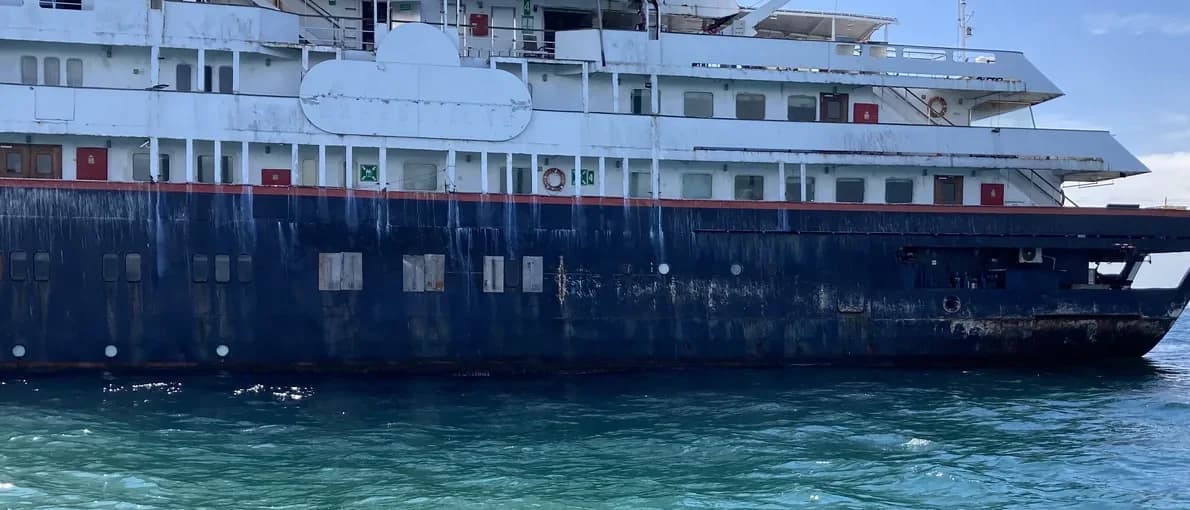
For more than one year, TESS has provided owner-side technical management for an approximately 100 m RINA-class premium expedition passenger vessel in Panama. One continuous programme connects maintenance, defects, repairs, procurement and the people responsible for moving the work forward.
The vessel remains afloat with a reduced technical crew onboard. Technical management and preparation for future dry dock and rehabilitation continue.
Project at a Glance
- Vessel
- Premium expedition passenger vessel
- Approx. LOA
- 100 m
- Class
- RINA
- Location
- Panama
- Engagement
- More than one year · ongoing
- Role
- Owner-Side Technical Management
- Owner
- Confidential shipowner
- Current status
- Afloat · reduced onboard technical crew
- Future programme
- Dry dock, major refit / rehabilitation and eventual operational return
- Intended operation
- Worldwide
From Recovery to Continuous Control
Initial recovery establishes the technical picture: recover, inspect, stabilize and build the recovery plan. Ongoing management keeps that picture current as vessel condition, priorities, resources and future work change.
Monitor → Prioritize → Maintain → Procure → Coordinate → Respond → Report → Prepare → Progress
See the initial passenger-vessel recovery and stabilization case ↗One Vessel. Many Technical Interfaces.
Completing individual repairs does not, by itself, bring a complex vessel under technical control. Defects, crew activities, suppliers, contractors, Class requirements and future work can move through separate channels while depending on the same equipment, access or technical decision.
TESS maintains one connected technical picture: what has changed, what matters next, who is responsible for each action, what requires the owner's decision and how today's work affects the future programme.
The Continuous Technical-Control Model
TESS is the owner's technical coordination layer, connecting the vessel's condition with execution, reporting and preparation for future work.
OWNER
Direction · decisions · approval of planned major scopes and significant budgets
TESS · OWNER-SIDE TECHNICAL MANAGEMENT
Assess · prioritize · recommend · coordinate · track · report
- PMS + defects
- Onboard technical crew
- Engineering + repair scopes
- Contractors + specialists
- OEMs + suppliers
- Procurement + logistics
- Surveyors + Class
- Authorities + local technical stakeholders
- Emergency technical response
- Future dry-dock programme
PMS & Defect-to-Closure Control
TESS maintains and uses the planned maintenance system (PMS), defect lists, job lists and maintenance matrices. Priorities and execution status are tracked continuously, with weekly and monthly reporting connecting onboard work to owner-side decisions.
A reported defect is information. A controlled defect has an assigned responsible person, priority, action route, procurement requirement, execution status, verification record and closure.
- Identify
- Assess
- Prioritize
- Recommend
- Approve
- Procure / assign
- Execute
- Test
- Document
- Close
Closure follows verification and documentation. Findings that require more work return to the active defect list, maintenance plan or future repair scope.
Urgent safety, preservation or critical-machinery event ↓Owner-Side Decision Support
TESS assesses the condition, defines technical requirements, prepares work scopes and budget recommendations, obtains and evaluates quotations, and presents the technical recommendation to the owner.
- Assessment
- Recommendation
- Scope
- Budget
- Owner approval
- Execution
The owner approves planned major scopes, significant budgets and non-emergency material work. TESS coordinates execution following the applicable approval.
Procurement, Legacy Equipment & Obsolescence
On an aging or technically complex vessel, procurement often begins as an engineering problem before it becomes a purchasing problem.
An order starts with the installed equipment and the technical requirement. Where relevant, TESS identifies spares, verifies maker, model and serial details, issues RFQs, qualifies suppliers and compares technical and commercial offers before coordinating logistics, customs and onboard delivery.
- Confirm installed equipment
- Verify technical identity
- Investigate original OEM support
- Review technically compatible alternatives
- Assess repair / reconditioning
- Assess engineered substitution
- Review downstream interfaces
- Assess supportability and lifecycle risk
- Develop replacement / modernization scope when justified
Maintain the existing system where technically sensible. Modernize where continued reliance on obsolete equipment no longer makes technical or commercial sense.
Emergency sourcing, stock planning, critical spares and long-lead items remain connected to the maintenance priorities and future repair packages. An alternative manufacturer is assessed for compatibility, interfaces and future support—not on purchase price alone.
Engineering-led marine procurement ↗Contractor & Specialist Management
Finding a contractor is the beginning of the work. TESS connects scope, quotation, mobilization, onboard interfaces and verified closure within the same technical programme.
Define & compare
Identify contractors, define the work scope, issue RFQs, review quotations and compare technical offers. Identify exclusions, gaps and dependencies before presenting an owner recommendation.
Approve & mobilize
Coordinate appointment after approval, mobilization and access. Align the contractor's work with the vessel technical crew, OEMs, suppliers, surveyors and other specialists.
Track & close
Track progress, coordinate testing, maintain punch lists and open items, and collect the documentation required for closure. Contractual responsibilities remain with the relevant parties.
When Planned Technical Management Becomes Emergency Response
The ongoing engagement has also required response to generator failure, significant equipment failures, severe-weather technical events and urgent technical attendance during a port requirement. These events are described in generalized form to preserve confidentiality.
Immediate attendance is connected back to the programme. Findings update defect history; technical follow-up informs procurement, testing, future maintenance, the PMS and repair planning. An urgent event changes the immediate priority while the longer-term technical picture remains actively maintained.
- Technical response
- Defect history
- Procurement + testing
- PMS + future repair planning
Onboard Technical Crew + Shore-Side Coordination
A reduced technical crew remains onboard. TESS coordinates the shore-side technical programme with the onboard team and provides or arranges additional technical resources where required by the confirmed scope.
Crew observations and completed tasks feed into maintenance priorities and defect tracking. Shore-side coordination connects those needs to engineering, procurement and specialists, with technical crew support and responsibilities defined by the engagement.
Class, AMP, ACP & Technical Interfaces
Technical coordination may involve RINA, the Panama Maritime Authority (AMP), the Panama Canal Authority (ACP), Port State where applicable, port / harbour authorities, surveyors and other relevant stakeholders.
TESS prepares technical information, organizes inspections and surveys, follows technical requirements, and supports repair and survey preparation. Class-related inputs remain connected to the work list and future docking scopes.
TESS coordinates the technical interface. Class and each authority retain their own classification and statutory authority, including their decisions on approval and acceptance.
Technical Systems Within the Programme
Across the engagement, TESS has inspected, assessed, maintained, troubleshot, repaired, coordinated or developed future work scopes across multiple vessel systems. The level of intervention varies by equipment and technical priority; inclusion here does not mean a complete overhaul of every system.
- Propulsion & power
- Main engines, generator systems and generator-overhaul work
- Electrical & control
- Switchboards, electrical distribution and automation
- Machinery & hotel systems
- HVAC, pumps, piping and valves
- Deck equipment
- Deck machinery and cranes
- Safety & navigation
- Fire and safety systems and navigation equipment
- Structure & survey scope
- Steel, tanks, Class-related repairs and underwater scope
Scope coverage across an ongoing engagement. Individual equipment status is tracked in the technical programme and is not assigned a public completion label here.
Building the Future Dry-Dock & Major Refit Programme
The future dry dock does not begin when the vessel enters the yard.
Ongoing management is already assembling defect history, equipment knowledge, survey inputs, procurement strategy, long-lead planning, work packages, technical priorities and Class-related requirements. Each contributes to a progressively structured dry-dock work list.
- ONGOING / IN DEVELOPMENT
Ongoing technical management
- ONGOING / IN DEVELOPMENT
Condition history + PMS + defects
- ONGOING / IN DEVELOPMENT
Engineering / repair packages
- ONGOING / IN DEVELOPMENT
Long-lead procurement
- ONGOING / IN DEVELOPMENT
Class / survey inputs
- ONGOING / IN DEVELOPMENT
Dry-dock work list
- FUTURE OBJECTIVE
Major refit / rehabilitation
- FUTURE OBJECTIVE
Future operational return
Preparation is ongoing. The progression shows how technical inputs build the future programme; it is not a record of completed docking or refit milestones.
Current Ongoing Position
- PMS, maintenance priorities and defects remain under active management.
- Repair packages progress with procurement aligned to technical requirements.
- Obsolete equipment is assessed for repair, substitution or modernization.
- Contractors, technical crew and specialist interfaces are connected within one programme.
- Emergency events feed into ongoing control, and Class / authority interfaces remain coordinated.
- The future dry-dock programme is progressively structured from the vessel's technical history.
The vessel's complete rehabilitation and return to normal operation remain future programme objectives and are not presented as completed outcomes.
One vessel. Many technical interfaces. One continuously maintained technical picture.
Connect the Next Scope
Tell Us About the Vessel's Technical Situation
Start with the information available. TESS will review the technical situation and the support required within an agreed scope.